
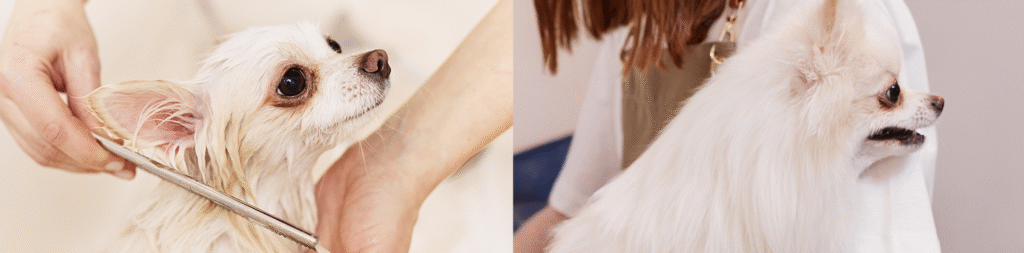
Shedding is one of the most common and misunderstood parts of canine care. While regular brushing removes loose fur and prevents matting, deshedding goes a step further. It targets the undercoat to keep a dog’s skin and coat healthy.
A frequent question among pet owners and groomers is whether it is better to deshed a dog when the coat is wet or dry.
1. Understanding what deshedding really means
Deshedding is not simply brushing. It is a controlled technique designed to remove dead undercoat hair without harming new growth. Professional groomers rely on specialized tools such as undercoat rakes, slicker brushes, and forced-air dryers to release trapped fur while protecting the outer layer.
The effectiveness of this process depends largely on coat type, texture, and hydration. This is where the wet-versus-dry decision matters most.
2. Deshedding a dog when the coat is dry
Dry deshedding is the traditional and most widely recommended approach, especially for double-coated breeds like Huskies, Golden Retrievers, and German Shepherds.
Benefits of dry deshedding:
Tools glide more smoothly through clean, fully dried fur.
Loose undercoat hair separates naturally, allowing even removal.
Lower risk of skin irritation or breakage compared with working through damp tangles.
Easier visual assessment of coat density and any underlying skin issues.
Dry deshedding should only be performed after a thorough bath and complete drying process. Brushing a dirty or oily coat creates friction and discomfort.
3. Deshedding a dog when the coat is wet
Wet deshedding can be effective only in specific cases, usually during or immediately after bathing. High-end grooming salons sometimes use a deshedding shampoo or conditioner that loosens dead undercoat hair. When paired with a high-velocity dryer, this method can significantly reduce shedding volume.
When wet deshedding works best:
Short-coated or smooth breeds such as Labradors or Beagles.
Dogs experiencing heavy seasonal shedding.
When using a product formulated specifically for wet deshedding.
Risks and cautions:
Brushing or combing wet hair can stretch and damage the hair shaft.
Improper technique may irritate sensitive skin or pull live coat.
Not ideal for curly, long, or matted coats.
4. The professional recommendation
For most breeds, dry deshedding after a complete wash and blow-dry delivers the safest and most effective results.
Wet deshedding should be limited to the bathing stage and performed with professional products and equipment.