
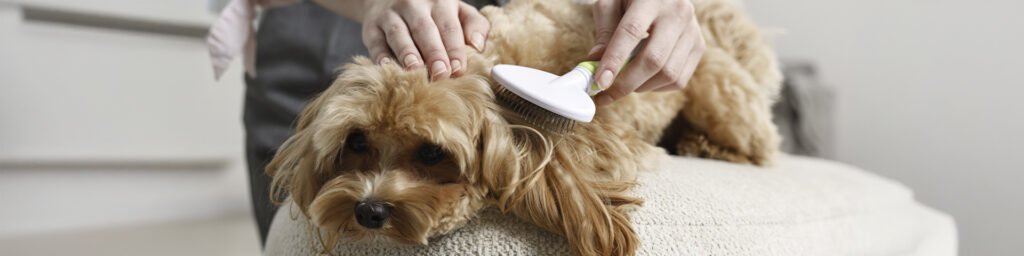
A Groomer’s Guide to Healthier Skin, a Shinier Coat, and a Stress-Free Routine
If you’ve ever paused mid-grooming and wondered, “Am I brushing my dog the right way?”—you’re asking the exact question professional groomers hear every day. And the answer is more important than most pet owners realize.
Brushing your dog isn’t just about appearance. Done correctly, it improves circulation, distributes natural oils, prevents painful matting, and keeps your dog’s skin healthy. Done incorrectly, it can cause discomfort, break the coat, and even create long-term grooming issues.
Let’s break it down the right way—just as a certified groomer and canine care specialist would.
The Golden Rule: Always Brush in the Direction of Hair Growth
In most cases, you should brush your dog’s coat in the natural direction it grows—from head to tail.
Why this matters:
- Protects the coat structure – Brushing against the grain can snap hair strands, especially in long or silky coats.
- Prevents skin irritation – The wrong direction can pull on the skin and cause micro-abrasions.
- Enhances natural shine – Brushing with the grain distributes oils evenly, giving that polished, healthy finish.
👉 Think of it like brushing your own hair—you wouldn’t constantly brush it upward or backward.
When (and Why) You Might Brush Against the Grain
There are professional techniques where brushing against the coat is useful—but they must be done carefully and intentionally.
1. For Fluffing (Professional Finish)
Groomers sometimes brush against the hair growth first, then finish with the grain to create volume—common in breeds like Poodles or Bichons.
2. For Detangling Mats
When dealing with knots:
- Start by gently lifting the hair outward (slightly against the grain)
- Then work through tangles in small sections
- Finish by smoothing with the grain
⚠️ Important: This should always be done with the correct tools and light pressure. Aggressive brushing can hurt your dog and worsen tangles.
Coat Type Matters (A Lot)
Not all coats behave the same. Here’s how direction and technique vary:
Short Coats (Labrador, Beagle)
- Brush with the grain only
- Use rubber brushes or soft bristles
- Focus on removing loose hair and boosting shine
Medium to Long Coats (Golden Retriever, Yorkie)
- Start at the ends and work upward (line brushing technique)
- Always finish with the grain
- Prevent tangles before they become mats
Curly or Dense Coats (Poodle, Doodle mixes)
- Section the coat and brush from skin outward
- Lightly lift the coat when needed
- Finish smoothing in the direction of growth
Double Coats (Husky, German Shepherd)
- Use an undercoat rake with the grain
- Never aggressively brush against the coat—it can damage the protective layer
Pro Technique: Line Brushing (What Groomers Actually Do)
If you want a truly professional result, use line brushing:
- Part the hair horizontally
- Brush a small section from the skin outward
- Move layer by layer
- Always finish each section with the grain
This ensures you’re not just brushing the surface—you’re reaching the undercoat where tangles actually form.
Common Mistakes to Avoid
- ❌ Brushing randomly in all directions
- ❌ Applying too much pressure
- ❌ Skipping detangling sprays on long coats
- ❌ Only brushing the top layer (this leads to hidden mats)
- ❌ Brushing a completely dry, tangled coat
Final Takeaway
Brush with the direction of hair growth as your default rule.
Use against-the-grain techniques only with purpose—and always finish by smoothing the coat down.
A consistent, correct brushing routine doesn’t just make your dog look better—it keeps them comfortable, healthy, and happy.