
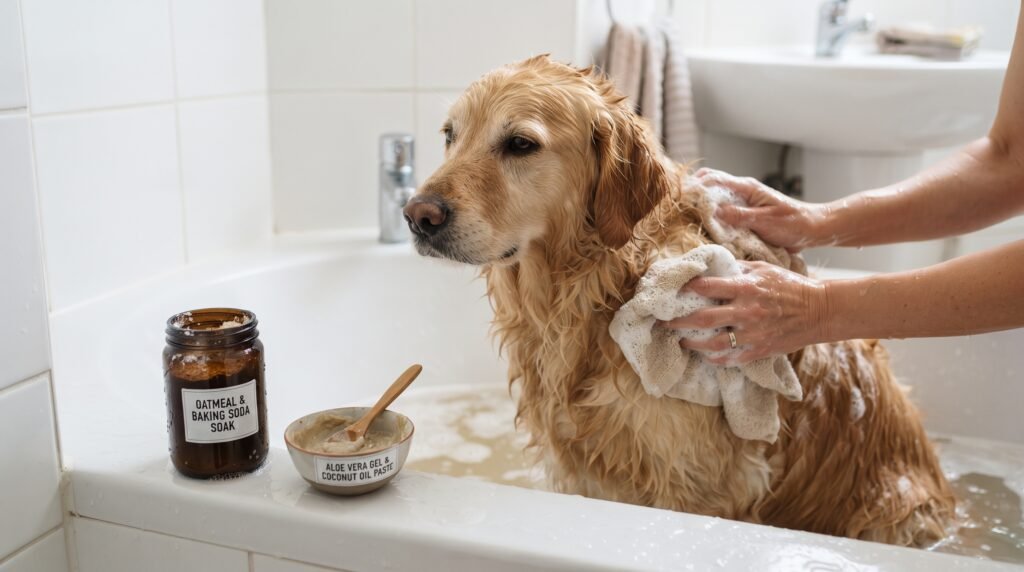
What Can I Use Instead of Dog Shampoo? Safe Alternatives and What to Avoid
Imagine this: Your dog has just enjoyed a wonderful afternoon outdoors, perhaps running through the backyard, playing at the park, or exploring a sandy beach. Unfortunately, they’ve brought home more than happy memories. Their coat is covered in dirt, and a bath is clearly overdue.
You head to the bathroom, only to discover that you’ve run out of dog shampoo.
Now you’re wondering: What can I use instead of dog shampoo?
The good news is that there are several ways to safely clean your dog without immediately reaching for a bottle of traditional shampoo. However, not every household product is appropriate for canine skin.
The safest temporary alternative is often plain lukewarm water, especially when your dog only needs a light rinse. For minor dirt or localized messes, a damp washcloth or fragrance-free wipes specifically formulated for dogs can also be useful.
For a complete bath, however, a properly formulated dog shampoo remains the preferred choice.
Understanding which alternatives are appropriate—and which ingredients to avoid—can help you protect your dog’s skin, maintain a healthy coat, and prevent unnecessary irritation.
Whether you’re caring for a Goldendoodle in Palm Beach, a Golden Retriever in New York, or a Maltese enjoying the warm Florida sunshine, choosing the right cleaning method is an important part of responsible grooming.
Can You Wash a Dog Without Dog Shampoo?
Yes. In many situations, you can clean your dog without shampoo.
The best method depends on how dirty your dog is, their coat type, and whether they have sensitive skin or an existing dermatological condition.
For example, a dog with sandy paws after a beach walk may only need a thorough rinse with lukewarm water.
A dog with a little mud on their legs may benefit from gentle cleaning with a damp washcloth.
However, if your dog has a greasy coat, a strong odor, or significant buildup of dirt and debris, water alone may not provide sufficient cleaning.
In those situations, using a dog-specific shampoo is generally the safest and most effective option.
The important distinction is between removing surface dirt and properly cleansing the skin and coat.
1. Plain Lukewarm Water: The Safest Temporary Alternative
When dog shampoo isn’t available, plain lukewarm water is often your best first option.
Water can help remove:
Loose dirt.
Sand.
Pollen.
Dust.
Mud.
Surface debris.
This approach is particularly useful for dogs that spend time outdoors.
For example, after a walk along a Florida beach, rinsing your dog’s paws and coat with fresh water can help remove sand and saltwater residue.
How to Use It
Brush out loose debris and check for tangles before bathing.
Use lukewarm water rather than hot water.
Gently rinse the dirty areas.
Avoid directing water into the ears, eyes, or nose.
Dry your dog thoroughly, especially if they have a dense or long coat.
Professional grooming tip: Water is excellent for removing many forms of surface dirt, but it doesn’t break down oils and greasy buildup as effectively as a properly formulated shampoo.
If your dog needs a deep cleaning, wait until you have an appropriate canine product.
2. Dog-Safe Grooming Wipes
Dog grooming wipes are another convenient alternative when a full bath isn’t necessary.
High-quality wipes formulated specifically for dogs can help clean small areas without saturating the entire coat.
They’re particularly useful for:
Cleaning paws after walks.
Removing light dirt from the legs.
Wiping the outer coat.
Cleaning around the body after outdoor activities.
Maintaining hygiene between professional grooming appointments.
Choose wipes that are specifically labeled for canine use.
Fragrance-free options may be preferable for dogs with sensitive skin, although individual ingredients still matter.
Avoid using household disinfecting wipes, which may contain chemicals that are unsuitable for contact with your dog’s skin.
Are Baby Wipes Safe for Dogs?
Baby wipes are designed for human skin, not canine skin.
Although some may appear gentle, their ingredients and preservatives aren’t necessarily appropriate for dogs, particularly when used repeatedly or on areas the dog may lick.
Dog-specific grooming wipes are the better choice.
3. Waterless Dog Shampoo
Waterless shampoos are convenient for maintaining a clean coat between baths.
These products are available as foams, sprays, and other leave-on formulations designed specifically for dogs.
Depending on the product, they may help:
Freshen the coat.
Remove light surface dirt.
Reduce mild odors.
Improve coat manageability.
Maintain cleanliness between grooming appointments.
Waterless shampoos can be particularly practical for dogs that dislike bathing or need a quick refresh.
However, they aren’t a complete replacement for traditional bathing when the coat is heavily soiled.
Always follow the manufacturer’s instructions and avoid using the product on irritated or broken skin unless approved by your veterinarian.
4. A Damp Washcloth for Small Messes
Sometimes, the simplest solution is the most appropriate.
A soft washcloth dampened with lukewarm water can be useful for removing minor dirt from specific areas.
This method works especially well for:
Paws.
Legs.
The outer coat.
Small areas of dried dirt.
Gentle cleaning around the face.
When cleaning your dog’s face, use a separate clean cloth and avoid rubbing directly against the eyes.
Don’t introduce water or cleaning products into the ear canals.
For dogs with facial folds, gently clean accessible areas and dry them thoroughly to prevent moisture from remaining trapped.
This method is ideal when your dog needs a little attention rather than a complete bath.
Can You Use Human Shampoo on Dogs?
One of the most common questions pet owners ask is whether regular human shampoo can be used as a substitute.
Human shampoo is not recommended for routine dog bathing.
Canine skin differs from human skin in several important ways, including its surface pH, barrier characteristics, and sensitivity to certain ingredients.
Human shampoos are formulated for human hair and scalp conditions.
Using them on dogs may contribute to:
Skin dryness.
Irritation.
Itching.
Disruption of the skin barrier.
Increased sensitivity in susceptible dogs.
Fragrances, essential oils, and certain cleansing agents may also cause problems.
While a single accidental use of a mild human shampoo doesn’t automatically mean your dog will experience a reaction, it’s not a substitute you should rely on.
If you don’t have dog shampoo available, a plain-water rinse is generally a more conservative choice.
Is Baby Shampoo Safe for Dogs?
Baby shampoo is sometimes recommended online as an emergency alternative because many formulas are marketed as gentle.
However, gentle for babies doesn’t necessarily mean appropriate for dogs.
Baby shampoos are still formulated for human skin, and ingredients vary considerably between products.
Some may contain fragrances or other substances that could irritate sensitive canine skin.
If your dog requires frequent bathing or has allergies, dryness, or a diagnosed skin condition, it’s especially important to avoid experimenting with household products.
A veterinary-recommended canine shampoo is the safer long-term option.
Can You Wash a Dog With Dish Soap?
Dish soap is another frequently suggested substitute.
However, it isn’t recommended for routine bathing.
Dish detergents are designed to break down grease and food residue, not to maintain the delicate balance of a dog’s skin and coat.
Using dish soap may remove too much surface oil and contribute to dryness or irritation.
Although veterinarians may occasionally recommend specific cleansing agents in unusual circumstances, those situations shouldn’t be confused with regular grooming.
For everyday bathing, don’t replace dog shampoo with dish soap.
If your dog has been exposed to a potentially toxic substance, contact your veterinarian or an animal poison control service promptly for appropriate decontamination instructions.
Can You Use Baking Soda Instead of Dog Shampoo?
Baking soda frequently appears in homemade dog shampoo recipes.
Some owners use it because of its odor-absorbing properties.
However, baking soda isn’t a complete cleansing product, and applying it directly to your dog’s coat or skin isn’t necessarily harmless.
Potential concerns include:
Skin irritation.
Residue remaining in the coat.
Dryness.
Accidental ingestion during licking.
Baking soda should not be treated as a universal substitute for canine shampoo.
For dogs with sensitive skin, avoiding unnecessary household ingredients is particularly important.
What About Apple Cider Vinegar?
Apple cider vinegar is another popular ingredient in homemade dog grooming recipes.
However, its acidity can irritate sensitive or damaged skin.
It may also cause significant discomfort if it comes into contact with the eyes, open wounds, or inflamed areas.
There is insufficient evidence to recommend apple cider vinegar as a routine replacement for properly formulated dog shampoo.
If your dog has persistent odor, itching, or skin irritation, consult a veterinarian rather than experimenting with acidic home remedies.
Can You Use Coconut Oil to Clean Your Dog?
Coconut oil is sometimes promoted as a natural grooming solution.
However, it isn’t a shampoo and doesn’t effectively replace the cleansing action of a properly formulated canine product.
Applying coconut oil directly to the coat may leave greasy residue, attract dirt, or encourage licking.
Although certain veterinary products may contain coconut-derived ingredients, that doesn’t mean applying plain coconut oil is appropriate for every dog.
If your dog has dry or irritated skin, identifying the underlying cause is more important than applying oils without guidance.
What Should You Never Use to Bathe a Dog?
Some household products should never be used as substitutes for canine shampoo.
Avoid:
Household cleaning detergents.
Disinfectants.
Bleach.
Laundry detergent.
Strongly fragranced soaps.
Essential oil mixtures.
Human dandruff shampoos without veterinary direction.
Products containing ingredients known to be toxic to dogs.
These products can cause irritation, chemical injury, or other health problems.
Remember that dogs frequently lick their coats after bathing, which creates an additional route of exposure to potentially harmful ingredients.
When choosing grooming products, safety should always come before convenience.
How to Clean Your Dog Safely Without Shampoo
If you’ve run out of dog shampoo and your dog needs immediate cleaning, follow these steps.
Step 1: Assess How Dirty Your Dog Is
Determine whether your dog needs a full bath or simply localized cleaning.
Light dirt often doesn’t require shampoo.
Step 2: Brush Before Getting the Coat Wet
For dogs with long, curly, or dense coats, gently remove loose debris and identify tangles before rinsing.
Avoid forcefully brushing through tight mats.
Step 3: Use Lukewarm Water
Rinse the affected areas gently.
Avoid hot water, which can cause discomfort and irritate the skin.
Step 4: Clean Small Areas With a Soft Cloth
Use a clean, damp washcloth to remove remaining surface dirt.
Step 5: Rinse Thoroughly
If you’ve used any dog-specific cleansing product, follow its rinsing instructions carefully.
Step 6: Dry the Coat Properly
Use clean towels to remove excess moisture.
Dogs with long or dense coats may require additional drying to prevent moisture from remaining trapped near the skin.
Step 7: Schedule Proper Grooming When Necessary
If your dog’s coat remains greasy, dirty, or tangled, arrange a bath using appropriate canine products or schedule a professional grooming appointment.
Does Your Dog’s Coat Type Affect Which Shampoo Alternative Is Safe?
Yes.
Different coat types require different approaches to cleaning and maintenance.
Short-Haired Dogs
Breeds such as French Bulldogs, Beagles, and Boxers may respond well to a simple water rinse when dealing with light surface dirt.
However, dogs with skin folds require careful cleaning and drying.
Long-Haired Dogs
Maltese, Shih Tzus, and Yorkshire Terriers need particular attention because moisture can worsen existing tangles and make coat maintenance more difficult.
Thorough drying and gentle combing are important.
Double-Coated Dogs
Golden Retrievers, Huskies, and German Shepherds have dense coats that may retain moisture.
After rinsing, ensure the coat is dried appropriately, particularly near the skin.
Curly-Coated Dogs and Doodles
Poodles, Goldendoodles, and Labradoodles can develop tangles and matting when their coats become wet and aren’t properly maintained.
For these dogs, professional grooming may be especially helpful when the coat requires thorough bathing, drying, and brushing.
How Often Should You Bathe Your Dog?
Bathing frequency depends on several factors, including:
Breed.
Coat type.
Lifestyle.
Skin condition.
Activity level.
Environmental exposure.
Veterinary recommendations.
Many healthy dogs do well with bathing approximately every four to eight weeks, although some require more frequent or less frequent baths.
Dogs with diagnosed skin conditions may need medicated bathing schedules prescribed by a veterinarian.
For dogs that spend considerable time outdoors, routine paw rinsing and coat maintenance between baths may help reduce dirt accumulation without unnecessary shampooing.
The goal is to maintain cleanliness while protecting the skin’s natural barrier.
When Should You Contact a Veterinarian Instead of Trying a Shampoo Alternative?
Sometimes, what appears to be a grooming issue is actually a medical concern.
Contact your veterinarian if your dog experiences:
Persistent itching.
Red or inflamed skin.
Unusual hair loss.
Open sores.
Strong or recurring odors.
Excessive licking.
Skin flaking accompanied by discomfort.
Repeated ear problems.
These symptoms may be associated with allergies, infections, parasites, or other conditions that require veterinary diagnosis.
Changing shampoos or experimenting with household remedies may delay appropriate treatment.
Frequently Asked Questions About Dog Shampoo Alternatives
What can I wash my dog with if I don’t have dog shampoo?
For light dirt, plain lukewarm water is often the safest temporary option. A damp washcloth or dog-specific grooming wipes can also help clean localized areas.
Can I use regular shampoo on my dog just once?
A single use of mild human shampoo may not necessarily cause a problem, but human shampoo isn’t recommended for routine canine bathing. A plain-water rinse is generally preferable when dog shampoo isn’t available.
Can I use Dawn dish soap to wash my dog?
Dish soap isn’t recommended for routine dog bathing because it can remove protective surface oils and irritate the skin. Use a dog-specific shampoo whenever possible.
Is baby shampoo better than regular shampoo for dogs?
Some baby shampoos are milder than certain adult formulas, but they’re still designed for human skin. Dog-specific products are preferable.
Can I bathe my dog with just water?
Yes. Water alone can remove sand, dust, pollen, and light dirt. However, it may not adequately remove grease, strong odors, or heavy buildup.
Can I use homemade dog shampoo?
Homemade recipes vary widely in safety and effectiveness. Some ingredients commonly suggested online can irritate canine skin. It’s generally better to use a properly formulated dog shampoo.
What is the safest natural alternative to dog shampoo?
For a dog that only needs a light rinse, plain lukewarm water is a simple option that avoids introducing unnecessary ingredients.
Final Thoughts: What Can You Use Instead of Dog Shampoo?
So, what can you use instead of dog shampoo?
For light cleaning, plain lukewarm water, a soft damp washcloth, or dog-specific grooming wipes can be practical alternatives.
However, these options aren’t necessarily replacements for a proper bath.
Human shampoo, dish soap, baking soda, vinegar, and homemade mixtures may seem convenient, but they can introduce unnecessary risks to your dog’s skin and coat.
The safest approach is to choose products specifically formulated for canine use and reserve temporary alternatives for situations where a full bath isn’t necessary.
At Puppy Love, we believe that exceptional grooming begins with understanding the individual needs of every dog.
From selecting appropriate products to maintaining healthy skin and a beautiful coat, professional grooming is about more than appearance. It’s about providing thoughtful, personalized care that supports your dog’s comfort and well-being.
Because when it comes to your best friend, the right care is always more important than a quick fix.