
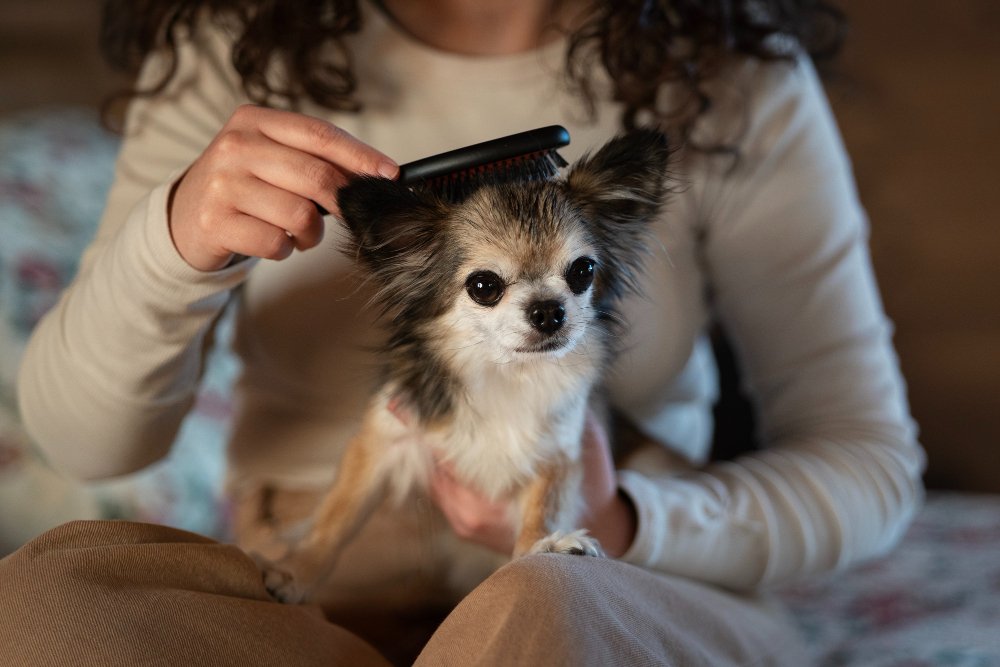
How Often Should Dogs Be Deshed? A Professional Groomer’s Guide to Healthy Coat Maintenance
If you’re constantly finding dog hair on your furniture, clothing, car seats, and floors, you’re not alone. One of the most common questions professional groomers hear from dog owners is:
“How often should my dog be deshed?”
The answer depends on several important factors, including your dog’s breed, coat type, lifestyle, health, climate, and seasonal shedding cycle. While some dogs benefit from monthly deshedding treatments, others may require more frequent coat maintenance to stay healthy, comfortable, and mat-free.
As professional groomers and canine coat specialists, we often explain that deshedding is not just about reducing hair around the house — it’s an essential part of your dog’s skin and coat health.
In this guide, we’ll break down:
What deshedding actually means
How often different breeds should be deshed
Signs your dog needs a deshedding treatment
Common mistakes dog owners make
The difference between brushing and professional deshedding
How proper coat maintenance improves overall wellness
Whether you own a Golden Retriever in Palm Beach, a Husky in Manhattan, or a Labradoodle in Wellington, this expert guide will help you understand the ideal deshedding schedule for your dog.
What Is Deshedding?
Deshedding is the process of safely removing loose dead hair from your dog’s undercoat before it naturally falls throughout your home.
Professional deshedding treatments typically include:
Deep coat brushing
Undercoat removal
High-velocity drying
Specialized shampoos and conditioners
Coat-safe deshedding tools
Skin and coat evaluation
Unlike basic brushing at home, professional deshedding reaches deep into the coat to remove trapped undercoat hair while protecting the healthy outer coat.
This process:
Reduces excessive shedding
Prevents matting
Improves airflow to the skin
Keeps the coat healthier and shinier
Reduces allergens inside the home
Improves comfort, especially in warmer climates
So, How Often Should Dogs Be Deshed?
For most dogs, professional groomers recommend deshedding every:
Every 4 to 8 Weeks
This is the ideal range for maintaining a healthy coat and controlling loose hair buildup.
However, the exact frequency depends heavily on coat type.
Double-Coated Dogs Need More Frequent Deshedding
Breeds with double coats tend to shed the most.
Examples include:
Golden Retrievers
Huskies
German Shepherds
Australian Shepherds
Bernese Mountain Dogs
Labrador Retrievers
These dogs have:
A protective outer coat
A dense undercoat that sheds seasonally
For these breeds:
Professional deshedding every 4–6 weeks is often ideal
During heavy shedding seasons, some dogs benefit from treatments every 3–4 weeks
Without proper maintenance, loose undercoat hair becomes trapped, leading to:
Excessive shedding
Hot spots
Poor air circulation
Coat compaction
Skin irritation
Short-Haired Dogs Still Shed More Than People Realize
Many owners assume short-haired dogs do not require deshedding.
That’s a myth.
Breeds like:
Pugs
French Bulldogs
Beagles
Boxers
Labrador Retrievers
can shed heavily year-round.
Short-coated dogs usually benefit from:
Deshedding every 6–8 weeks
Weekly brushing at home
Even though the coat is short, dead hair and skin oils still accumulate over time.
Long-Haired and Doodle Breeds Have Different Needs
Dogs with curly or continuously growing coats — like Goldendoodles, Labradoodles, and Poodles — technically do not “shed” the same way double-coated breeds do.
However, loose hair becomes trapped inside the coat, causing:
Matting
Tangles
Skin irritation
For these breeds:
Brushing at home should happen several times weekly
Professional grooming every 4–6 weeks is highly recommended
In many doodles, trapped undercoat and dead hair can become painful if neglected.
Seasonal Shedding Changes Everything
Most double-coated dogs experience two major shedding cycles annually:
Spring coat blow
Fall coat transition
During these periods, shedding increases dramatically.
Professional groomers often recommend:
More frequent deshedding appointments
Additional brushing sessions at home
Hydrating coat treatments
Florida’s warmer climate can also cause some dogs to shed more consistently throughout the year rather than seasonally.
Signs Your Dog Needs a Deshedding Treatment
Many dogs show obvious signs when it’s time for coat maintenance.
Watch for:
Hair accumulating excessively around the home
Clumps of fur coming out during petting
Dry or dull-looking coat
Tangles near the undercoat
Increased scratching
Overheating easily
Strong dog odor
Matted areas behind ears or legs
A healthy coat should feel clean, breathable, and manageable — not dense, compacted, or greasy.
Can You Deshed a Dog Too Often?
Yes.
Over-deshedding can damage the coat when performed improperly or too aggressively.
Excessive deshedding may:
Irritate the skin
Thin the protective coat
Damage guard hairs
Increase sensitivity to heat and cold
Professional groomers use breed-specific techniques to safely remove only loose dead undercoat hair while preserving the integrity of the coat.
This is why using the wrong deshedding tool at home can sometimes do more harm than good.
At-Home Brushing vs Professional Deshedding
Many dog owners ask:
“Can’t I just brush my dog at home?”
Home brushing is extremely important — but it is not the same as a full professional deshedding treatment.
Professional grooming includes:
Coat assessment
Proper undercoat extraction
High-velocity drying
Professional-grade tools
Safe handling techniques
Skin monitoring
Most owners simply cannot remove compacted undercoat effectively with household brushes alone.
The best results come from combining:
Consistent home brushing
Routine professional deshedding
The Best Brushes for Deshedding
The right tools matter tremendously.
Professional groomers often use:
Undercoat rakes
Slicker brushes
Rubber curry brushes
Deshedding combs
High-velocity dryers
However, not every brush works for every breed.
Using harsh tools incorrectly can:
Break coat texture
Scratch the skin
Damage guard hairs
Breed-specific grooming matters.
Does Diet Affect Shedding?
Absolutely.
Nutrition plays a massive role in coat quality.
Poor diets often contribute to:
Excessive shedding
Dry skin
Weak hair follicles
Dull coats
Healthy coats benefit from:
Omega-3 fatty acids
High-quality protein
Proper hydration
Veterinary-approved nutrition
If shedding suddenly increases dramatically, it’s always wise to consult your veterinarian.
Final Thoughts
So, how often should dogs be deshed?
For most dogs, every 4–8 weeks is ideal — but coat type, breed, climate, and lifestyle all play an important role.
Proper deshedding is not simply cosmetic. It supports:
Skin health
Temperature regulation
Comfort
Reduced matting
Cleaner homes
Better overall wellness
When performed correctly, deshedding helps your dog look better, feel better, and live more comfortably year-round.
And when in doubt, trust a professional groomer who understands your dog’s unique coat structure and grooming needs.