
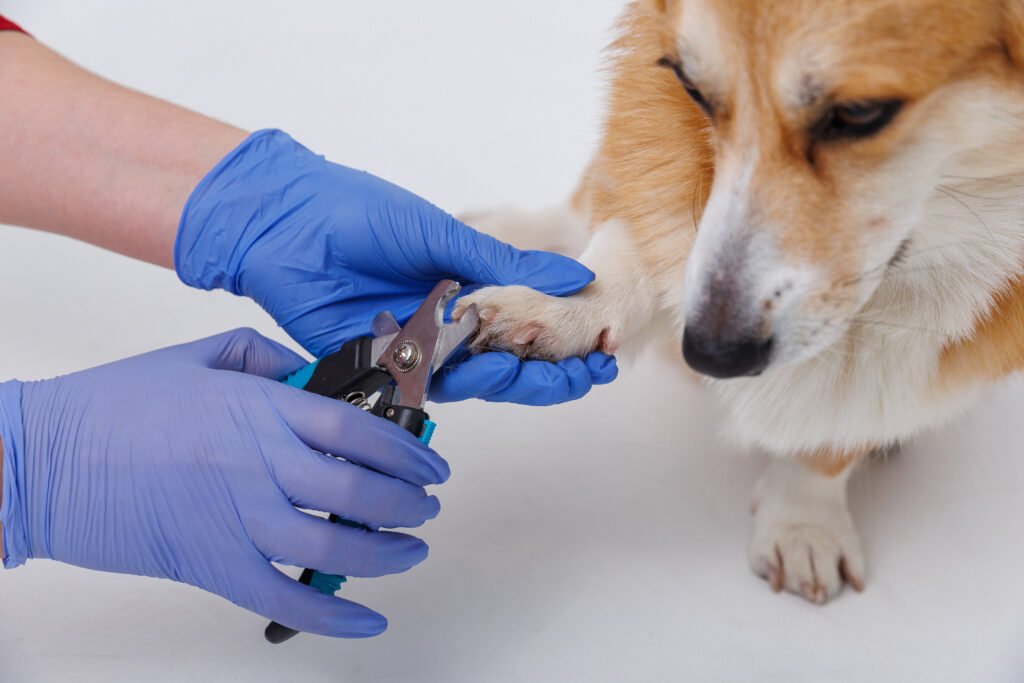
What Is the Right Cut for Dog Nails? A Professional Groomer’s Guide to Safe and Healthy Nail Trimming
For many dog owners, nail trimming is one of the most intimidating parts of grooming. One wrong cut can cause pain, bleeding, and anxiety—not only for your dog but for you as well.
If you’ve ever wondered, “What is the right cut for dog nails?”, you’re asking one of the most important questions in canine grooming.
The answer isn’t about cutting a specific length. It’s about understanding your dog’s nail anatomy, recognizing where the sensitive tissue begins, and trimming just enough to keep the nails healthy without causing discomfort.
As professional groomers and canine care specialists, we know that proper nail maintenance is about much more than appearance. Healthy nail length supports correct posture, balanced movement, joint health, and overall comfort throughout your dog’s life.
In this guide, we’ll explain how to identify the correct cutting point, how often nails should be trimmed, common mistakes to avoid, and when it’s best to leave the job to a professional.
Why Proper Nail Length Matters
Many owners don’t realize that overgrown nails affect much more than a dog’s feet.
When nails become too long, they can:
Alter your dog’s natural gait
Place additional stress on joints and ligaments
Cause discomfort while walking
Increase the risk of broken or torn nails
Lead to posture problems over time
Make slipping and loss of traction more likely on smooth floors
Keeping nails at the proper length helps your dog move naturally and comfortably.
Understanding the Dog Nail Anatomy
Before trimming, it’s important to understand what you’re cutting.
A dog’s nail has two main parts:
The Outer Nail
This is the hard keratin shell that can be safely trimmed.
The Quick
Inside every nail is a soft, living tissue called the quick, which contains blood vessels and nerve endings.
Cutting into the quick can cause:
Pain
Bleeding
Fear of future nail trims
The goal is always to remove only the excess nail while avoiding the quick.
So, What Is the Right Cut?
The correct cut removes the tip of the nail while leaving a safe distance from the quick.
For most dogs:
Trim small amounts at a time.
Make several tiny cuts instead of one large cut.
Follow the natural curve of the nail.
Stop trimming when you’re approaching the center of the nail.
Professional groomers prefer gradual trimming because it’s safer and less stressful for the dog.
How Short Should Dog Nails Be?
A healthy nail should be short enough that it does not constantly touch the floor when your dog is standing naturally on a level surface.
While every breed is different, properly maintained nails generally:
Allow comfortable walking
Do not click loudly on hard floors with every step
Support a natural paw position
Avoid unnecessary pressure on the toes
Occasional contact with the floor during movement can occur, but constant clicking often indicates that the nails are becoming too long.
Cutting Clear Nails vs. Black Nails
Clear or White Nails
Light-colored nails make trimming easier because the quick is often visible as a pink area inside the nail.
This allows owners and groomers to trim confidently while maintaining a safe margin.
Black Nails
Black nails require much greater caution because the quick cannot be seen from the outside.
Professional groomers trim black nails gradually, removing small sections while observing the center of the cut surface.
As the quick approaches, the center of the nail often changes appearance, becoming darker, softer, or showing a small gray or black dot.
When in doubt, stop trimming.
How Often Should Dog Nails Be Trimmed?
Most dogs benefit from nail trimming every:
Every 3 to 4 Weeks
However, the ideal schedule depends on:
Activity level
Walking surfaces
Breed
Age
Nail growth rate
Dogs that frequently walk on concrete may naturally wear their nails down more than dogs who spend most of their time indoors or on grass.
Routine maintenance is easier and safer than waiting until the nails become overgrown.
Signs Your Dog’s Nails Are Too Long
Watch for these common signs:
Nails constantly clicking on hard floors
Nails extending well beyond the paw pads
Curved nails beginning to curl
Difficulty maintaining traction
Changes in posture
Reluctance to walk on certain surfaces
Frequent slipping
Long nails should never be ignored, as they can eventually affect your dog’s mobility.
Common Nail Trimming Mistakes
Professional groomers frequently see the same errors.
Cutting Too Much at Once
Large cuts increase the risk of hitting the quick.
Small, gradual trims are much safer.
Using Dull Nail Clippers
Dull blades crush the nail instead of making a clean cut.
High-quality, sharp tools produce smoother, safer results.
Ignoring the Dewclaws
Dewclaws don’t naturally wear down through walking.
Without regular trimming, they may curl into the skin.
Waiting Too Long Between Trims
When nails remain overgrown for extended periods, the quick gradually grows longer as well.
This makes future nail trims more difficult because less nail can be safely removed at one time.
Consistent trimming encourages the quick to recede gradually, allowing healthier nail length over time.
Nail Grinding vs. Nail Clipping
Many professional groomers combine both techniques.
Nail Clippers
Best for removing excess length efficiently.
Nail Grinders
Ideal for:
Smoothing sharp edges
Creating rounded nail tips
Fine-tuning nail length
Dogs that tolerate vibration well
Using both methods often provides the safest and most polished result.
What If You Accidentally Cut the Quick?
Even experienced groomers occasionally nick the quick.
If this happens:
Stay calm.
Apply a styptic powder or clotting agent designed for pets.
Use gentle pressure if necessary.
Comfort your dog and avoid creating additional stress.
If bleeding does not stop within several minutes or the injury appears severe, contact your veterinarian promptly.
Why Professional Nail Care Makes a Difference
Many owners avoid trimming nails because they fear hurting their dog.
Professional groomers perform nail trims every day and understand:
Nail anatomy
Breed differences
Safe restraint techniques
Proper trimming angles
Stress-free handling
Regular professional nail maintenance helps keep dogs comfortable while minimizing the risk of injury.
Final Thoughts
So, what is the right cut for dog nails?
The right cut removes only the excess nail while staying safely away from the quick. The goal isn’t to make the nails as short as possible—it’s to maintain a healthy length that supports proper movement, comfort, and long-term paw health.
Routine nail care is one of the most important yet often overlooked aspects of canine grooming. When performed correctly, it helps prevent pain, improves mobility, protects the joints, and keeps your dog active and confident.
If you’re ever unsure where to cut, it’s always safest to consult a professional groomer. A careful, well-executed nail trim is far better than risking an injury, and your dog will thank you with every comfortable step.