
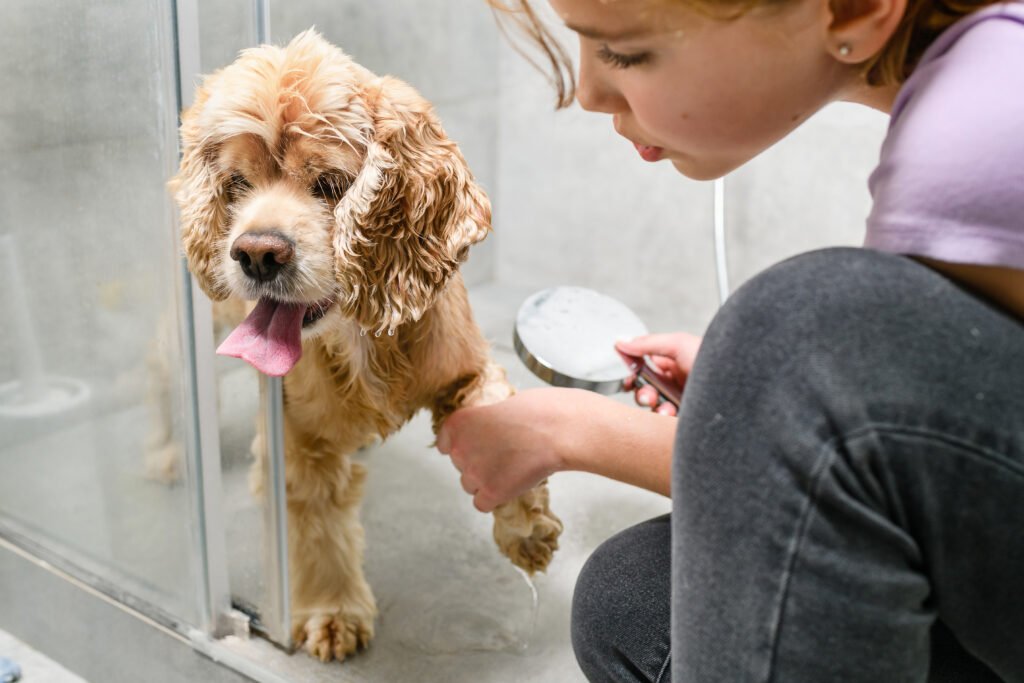
Is It OK to Groom Your Own Dog? What Professional Groomers Want Pet Parents to Know
Yes, it is absolutely OK to groom your own dog at home—and in many cases, regular home grooming is an important part of responsible pet care.
But there is an important distinction between routine grooming maintenance and attempting to perform every professional grooming service yourself.
Brushing your dog’s coat, cleaning around the eyes, checking the paws, maintaining good hygiene, and—in dogs that tolerate it—carefully trimming the nails can all be valuable parts of an at-home routine. More technical procedures, however, require knowledge of canine anatomy, coat structure, grooming equipment, handling, and safety.
So the better question isn’t simply, “Can I groom my own dog?”
It’s:
“Which parts of my dog’s grooming can I safely do at home, and which are better left to a professional?”
Understanding that difference can help you maintain a beautiful coat while protecting your dog’s skin, comfort, and overall well-being.
What Dog Grooming Can You Safely Do at Home?
For most healthy dogs, routine maintenance between professional appointments is not only appropriate—it’s highly beneficial.
Depending on your dog’s breed and coat, at-home grooming may include:
Regular brushing and combing
Removing loose surface hair
Checking for developing tangles
Cleaning around the eyes when necessary
Inspecting the ears
Checking paw pads
Bathing with appropriate canine products
Maintaining facial cleanliness
Carefully trimming nails if you know the proper technique
The key word is maintenance.
Regular home care prevents small issues from becoming larger, more uncomfortable grooming problems.
A few minutes of proper brushing several times a week, for example, may help prevent hours of difficult dematting later.
When Should You Not Groom Your Dog Yourself?
Certain grooming situations are considerably more complicated than they appear.
You should consider professional assistance if your dog has:
Severe matting
Significant skin irritation
Unusual lumps, sores, or lesions
Extremely overgrown nails
Behavioral issues during handling
A complicated breed-specific haircut
A dense or heavily impacted undercoat
A history of biting during grooming
Mobility limitations or physical discomfort
You should also stop if your dog becomes extremely distressed or if you aren’t confident that you can complete a procedure safely.
Knowing when not to continue is part of responsible grooming.
Why Grooming Your Own Dog Can Be Beneficial
When performed correctly, home grooming has several advantages.
1. It Strengthens Your Grooming Routine
Regular brushing and handling teach your dog that having their paws, ears, legs, and coat touched is a normal part of life.
This can make future grooming appointments easier.
2. You Become Familiar With Your Dog’s Body
When you routinely brush and inspect your dog, you’re more likely to notice changes such as:
New lumps
Skin irritation
Ticks
Tender areas
Changes in coat texture
Paw injuries
Grooming should never replace veterinary examinations, but regular handling can help you notice when something has changed.
3. It Helps Prevent Matting
This is especially important for breeds such as:
Poodles
Goldendoodles
Labradoodles
Shih Tzus
Maltese
Yorkshire Terriers
Bichon Frises
Consistent brushing and combing can prevent loose hair and small tangles from developing into tight mats.
4. It Keeps Your Dog Comfortable Between Appointments
Dogs don’t suddenly need grooming on the day of their salon appointment.
Coat maintenance is continuous.
Home grooming bridges the gap between professional visits and helps keep your dog comfortable throughout the month.
Where At-Home Grooming Can Go Wrong
Most grooming mistakes aren’t caused by neglect. They’re caused by owners trying to help without realizing how easily certain procedures can cause injury.
Here are some of the most common risks.
Cutting Mats With Scissors
This is one of the most dangerous home grooming mistakes.
When a mat is tight, it can pull the skin upward into the tangled hair. What looks like a safe space underneath the mat may actually contain folded skin.
Placing scissors beneath a tight mat can therefore cause serious cuts.
If you cannot safely brush or comb through a mat, let a professional groomer evaluate it.
Clipping Nails Too Short
Inside each nail is living tissue known as the quick, containing nerves and blood vessels.
Cutting into it can cause pain and bleeding.
Dark nails can be particularly challenging because the quick isn’t easily visible from the outside.
If you’re uncomfortable identifying the safe trimming point, professional nail care is a better option.
Using Human Shampoo
Your shampoo may smell wonderful, but that doesn’t make it appropriate for your dog.
Human and canine skin have different characteristics, and products designed for people may irritate or excessively dry a dog’s skin.
Use a properly formulated dog shampoo appropriate for your pet’s coat and skin needs.
Shaving a Double-Coated Dog
This deserves special attention.
Breeds such as:
Golden Retrievers
Siberian Huskies
German Shepherds
Australian Shepherds
Pomeranians
have specialized double coats.
Unless there is a legitimate medical or individual grooming reason, routinely shaving these coats is generally inappropriate.
The undercoat and protective guard hairs work together as part of the dog’s natural coat system. Incorrect clipping can alter coat appearance and texture and may result in uneven regrowth.
For excessive shedding, proper deshedding is usually a better approach than shaving.
Can You Give Your Dog a Haircut at Home?
Technically, yes—but this is where skill becomes particularly important.
Professional haircutting requires much more than knowing how to operate clippers.
A groomer considers:
Coat type
Hair growth direction
Skin folds
Anatomical landmarks
Blade selection
Clipper temperature
Safe restraint
Sensitive areas
The dog’s movement
Breed-specific styling
Areas around the eyes, ears, armpits, sanitary region, paws, and skin folds require particular care.
Dogs can move suddenly—even dogs that are normally calm.
A single unexpected movement while scissors or clippers are positioned incorrectly can result in injury.
Is It Cheaper to Groom Your Dog at Home?
Initially, it can appear that way.
But replicating professional grooming requires equipment that may include:
Quality clippers
Multiple blades and guards
Professional shears
Slicker brushes
Metal combs
Nail equipment
Coat-specific shampoos and conditioners
A safe grooming surface
Appropriate drying equipment
Then there’s the most important investment:
Learning how to use everything correctly.
For some owners, investing in home grooming equipment makes sense. For others, professional grooming is more efficient, safer, and ultimately more practical.
Home Grooming vs. Professional Grooming
The best approach doesn’t necessarily require choosing one or the other.
In fact, the healthiest grooming routines often combine both.
At Home
Focus on:
Brushing
Combing
Coat inspection
Basic hygiene
Paw checks
Positive handling exercises
At the Grooming Salon
Your professional groomer can handle:
Full haircuts
Thorough coat preparation
Professional bathing and drying
Deshedding treatments
Detailed nail care
Sanitary grooming
Difficult mat removal
Breed-specific styling
Think of professional grooming and home maintenance as complementary—not competing—forms of care.
How Often Should Your Dog See a Professional Groomer?
There is no universal schedule.
Your dog’s ideal grooming frequency depends on:
Breed
Coat type
Hair length
Lifestyle
Age
Health
Home maintenance
Dogs with continuously growing or high-maintenance coats may benefit from professional grooming approximately every 4–6 weeks.
Other dogs may need appointments every 6–8 weeks or longer, depending on their individual needs.
A professional groomer can help establish a schedule based on your dog’s coat rather than relying on a generic timeline.
What About Puppies?
Puppies benefit tremendously from gentle grooming introductions.
You don’t need to wait until your puppy requires a dramatic haircut.
Early grooming experiences can include:
Gentle brushing
Paw handling
Ear handling
Face touching
Short baths
Introduction to grooming sounds
Brief professional grooming visits
The objective is to make grooming predictable and familiar.
A puppy that gradually learns that grooming is safe may be much easier to handle as an adult.
When Should You Call a Veterinarian Instead of a Groomer?
Groomers are valuable members of your dog’s care team, but they don’t replace veterinarians.
Contact your veterinarian if you discover:
Open wounds
Significant inflammation
Persistent itching
Unusual skin growths
Signs of infection
Sudden hair loss
Pain during handling
Persistent ear problems
Unexpected changes in the skin or coat
A professional groomer may notice something unusual, but diagnosis and medical treatment belong with your veterinarian.
Frequently Asked Questions
Is it safe to groom your dog yourself?
Yes, many routine grooming tasks can be safely performed at home when you have the appropriate knowledge, tools, and a cooperative dog. More complicated procedures should be handled professionally.
Can I cut my dog’s hair myself?
You can, but clipping and scissoring require considerably more skill than basic brushing and bathing. Sensitive areas and moving dogs create genuine injury risks.
Should I groom my dog at home between professional appointments?
Absolutely. Regular brushing, combing, and coat inspection can make professional appointments easier and help prevent matting and coat buildup.
Can I shave my dog myself?
Shaving should never be approached casually, particularly with double-coated breeds. Coat structure and skin safety should be evaluated before deciding whether clipping is appropriate.
What is the hardest part of grooming a dog at home?
This varies by dog, but nail trimming, mat removal, detailed scissoring, sensitive-area clipping, and handling anxious or uncooperative dogs are among the procedures that require the most caution.
Final Thoughts: Should You Groom Your Own Dog?
So, is it OK to groom your own dog?
Yes—and professional groomers actually want owners to participate in their dog’s coat care.
Regular brushing, combing, basic hygiene, and gentle handling at home can make an enormous difference in your dog’s comfort and coat condition.
But responsible home grooming also means recognizing your limits.
You don’t need to become your dog’s professional groomer to be an excellent pet parent.
The ideal approach is often a partnership: you maintain your dog’s coat and healthy grooming habits at home, while a skilled professional handles the technical work that requires specialized tools, training, and experience.
When home care and professional grooming work together, the result isn’t simply a better-looking dog.
It’s a dog who is cleaner, more comfortable, easier to maintain, and able to experience grooming as a normal part of lifelong care.