
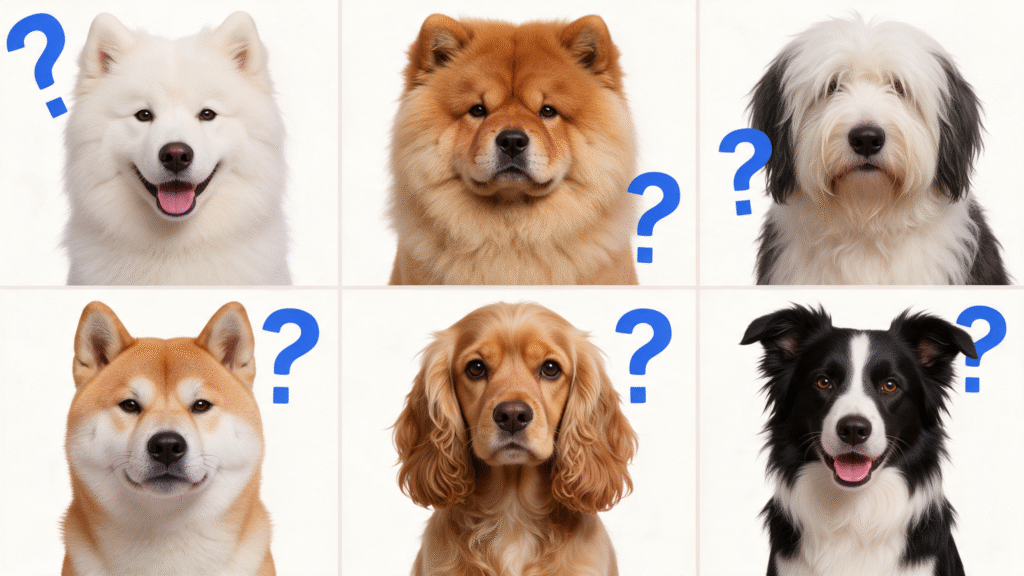
What Is the Most Difficult Dog to Groom? The Most Challenging Breeds, According to Professional Groomers
Some dogs can be brushed, bathed, and dried relatively quickly. Others can turn a grooming appointment into a highly technical, multi-hour process requiring specialized tools, advanced coat knowledge, patience, and exceptional handling skills.
So, what is the most difficult dog to groom?
There isn’t one universally “hardest” breed. However, dogs with dense double coats, continuously growing curly coats, corded coats, extremely long hair, heavy furnishings, or coats prone to matting are generally among the most challenging to groom correctly.
Breeds such as the Komondor, Puli, Afghan Hound, Standard Poodle, Bichon Frise, Old English Sheepdog, Newfoundland, and many Doodle mixes can require considerably more grooming expertise than the average dog.
But coat complexity is only part of the equation.
A dog’s size, temperament, age, physical condition, grooming history, and ability to tolerate handling can turn even a seemingly simple coat into a challenging professional grooming appointment.
Here’s what makes certain dogs so demanding—and why professional grooming can make such an important difference.
What Makes a Dog Difficult to Groom?
Professional groomers don’t judge difficulty based solely on breed.
Several factors determine how technically demanding a grooming appointment will be:
Coat density
Coat length and texture
Matting
Undercoat accumulation
Dog size and weight
Drying time
Breed-specific styling requirements
Sensitivity to handling
Previous grooming experiences
Age and mobility
Time between grooming appointments
A well-maintained Standard Poodle that has been professionally groomed every four weeks may actually be easier to groom than a small mixed-breed dog arriving with months of severe matting.
Coat condition matters enormously.
1. Komondor: One of the Most Specialized Coats in the Dog World
The Komondor immediately stands out because of its extraordinary corded coat.
Rather than being conventionally brushed, the coat naturally develops cords that require careful maintenance and separation.
The challenge isn’t simply keeping the coat visually attractive.
Proper cord maintenance requires understanding how the coat develops and preventing sections from becoming excessively large or improperly joined.
Bathing presents another challenge.
A fully developed corded coat can retain a tremendous amount of water, making thorough rinsing and drying particularly important.
Leaving moisture trapped within a dense coat can create skin and odor concerns.
For groomers unfamiliar with corded breeds, the Komondor can be exceptionally challenging.
2. Puli: Small Dog, Highly Specialized Grooming
The Puli also develops a distinctive corded coat.
Although significantly smaller than the Komondor, maintaining a mature Puli coat still requires specialized knowledge.
Cords must be appropriately separated, and bathing and drying require patience because moisture can remain trapped deep within the coat.
This isn’t a breed where conventional brushing techniques can simply be applied without understanding the coat structure.
3. Afghan Hound: Beautiful, Flowing—and Extremely High Maintenance
The Afghan Hound has one of the most recognizable coats in the canine world.
Its long, silky hair creates an elegant appearance, but maintaining that coat requires considerable work.
Afghan Hounds are susceptible to:
Tangles
Matting
Coat breakage
Debris becoming trapped in long hair
Maintaining the characteristic flowing coat requires regular bathing, conditioning, careful drying, brushing, and combing.
Incorrect technique can damage the hair and compromise the coat’s appearance.
For an owner who wants the Afghan’s coat maintained in excellent condition, grooming isn’t occasional maintenance—it’s a lifestyle.
4. Standard Poodle: Where Grooming Becomes an Art Form
Few breeds demonstrate a professional groomer’s technical ability quite like the Standard Poodle.
Poodle hair grows continuously and can become tangled and matted without regular maintenance.
But coat maintenance is only the beginning.
Creating a polished Poodle groom may require expertise in:
Clipper work
Scissoring
Coat preparation
Fluff drying
Symmetry
Topknot shaping
Foot and face work
Breed-specific patterns
Styles such as the Continental Clip require considerable technical skill.
Even a simpler pet trim benefits from excellent preparation and precise finishing.
For this reason, Poodles aren’t necessarily difficult because their coats are problematic—they’re challenging because exceptional Poodle grooming demands exceptional technique.
5. Bichon Frise: Small Dog, Big Grooming Challenge
The Bichon Frise may look like a soft white cloud, but creating that signature appearance takes considerable expertise.
A beautiful Bichon groom depends heavily on preparation.
The coat must be:
Thoroughly cleaned
Properly conditioned
Completely dried
Straightened and fluffed
Carefully combed
Precisely scissored
That rounded head and balanced silhouette don’t happen accidentally.
Scissor technique and symmetry are essential.
The Bichon is an excellent example of why a small dog doesn’t necessarily mean an easy grooming appointment.
6. Old English Sheepdog: A Serious Commitment to Coat Maintenance
The Old English Sheepdog combines several grooming challenges in one very large package.
Its abundant coat can become tangled and matted without consistent maintenance.
Problem areas commonly include:
Behind the ears
Armpits
Legs
Belly
Friction areas
Because of the dog’s size and amount of coat, bathing, drying, brushing, and finishing can also require significant time.
Maintaining a full Old English Sheepdog coat beautifully requires commitment from both the groomer and the owner.
Regular home brushing is essential.
7. Newfoundland: Size, Undercoat, Water—and Lots of Hair
Newfoundlands present a different type of challenge.
These are large dogs with dense, water-resistant double coats.
Professional grooming may involve extensive:
Undercoat removal
Bathing
Rinsing
High-velocity drying
Brushing
Combing
Paw and sanitary maintenance
Their sheer size adds another layer of difficulty.
Professional equipment and safe handling become especially important when working with giant breeds.
A Newfoundland undergoing a heavy seasonal shed can produce an extraordinary amount of loose undercoat.
8. Doodles: Why Their Coats Can Be More Complicated Than Owners Expect
Goldendoodles, Labradoodles, Bernedoodles, and other Poodle mixes have become extraordinarily popular.
They’re also among the dogs professional groomers frequently see with challenging coat conditions.
Why?
Because a Doodle’s coat can combine characteristics inherited from different coat types.
Depending on genetics, an individual dog may have hair that is:
Curly
Wavy
Dense
Woolly
Combination-textured
Loose hair can become trapped within the coat instead of simply falling away.
The result can be rapid mat formation—especially around friction areas such as the ears, collar, legs, armpits, and tail.
Regular brushing and combing down to the skin is critical.
For many Doodles, professional grooming approximately every 4–6 weeks can make coat maintenance considerably easier.
Does a Difficult Coat Mean the Dog Is Difficult?
Absolutely not.
A technically demanding coat and a difficult temperament are two completely different things.
A Newfoundland may have an enormous amount of coat but behave beautifully throughout the appointment.
Meanwhile, a short-haired dog may strongly resist having its nails handled.
Professional groomers therefore evaluate two separate considerations:
How challenging is the coat?
and
How comfortable is this individual dog with grooming?
Both influence the appointment.
Sometimes the Hardest Dog to Groom Is Simply a Severely Matted Dog
Breed isn’t always the biggest challenge.
Severe matting can make almost any dog difficult to groom safely.
Mats aren’t simply cosmetic knots.
When hair becomes tightly matted, it can pull continuously against the skin and conceal problems underneath.
Severe matting also makes brushing uncomfortable and sometimes inappropriate.
This is why professional groomers emphasize preventive maintenance.
Regular grooming is generally easier, safer, and more comfortable than trying to correct months of coat neglect in a single appointment.
Why Temperament Matters as Much as Coat Type
Grooming requires dogs to tolerate experiences they don’t naturally encounter every day.
These may include:
Standing on a grooming table
Paw handling
Nail trimming
Clippers
Scissors near the body
Bathing
High-velocity drying
Ear handling
Remaining relatively still
A dog that has been positively introduced to these experiences from puppyhood may be much easier to groom.
Fear, anxiety, previous negative experiences, pain, or insufficient exposure can make grooming more challenging.
This is why experienced groomers understand canine behavior in addition to coat care.
Which Dogs Need the Most Professional Grooming?
Dogs most likely to require consistent professional grooming include those with:
Continuously Growing Coats
Poodles, Bichons, Shih Tzus, Maltese, and many Doodle mixes.
Long, Silky Coats
Afghan Hounds and similar long-coated breeds.
Dense Double Coats
Newfoundlands, Samoyeds, Huskies, and other heavy-coated breeds.
Corded Coats
Komondors and Pulis.
Complex Breed-Specific Styles
Dogs whose owners want traditional or show-inspired grooming patterns.
These dogs aren’t necessarily unsuitable for owners.
They simply require a realistic commitment to coat maintenance.
How Can You Make a Difficult Dog Easier to Groom?
The most effective strategy begins between appointments.
Owners can help by:
Brushing consistently
Using a metal comb to check beneath the surface of longer coats
Handling paws regularly
Introducing grooming at a young age
Maintaining an appropriate appointment schedule
Avoiding long periods between professional grooms
Addressing tangles before they become tight mats
Consistency changes everything.
A high-maintenance coat that’s properly maintained can be far easier to groom than a supposedly low-maintenance coat that has been neglected.
Frequently Asked Questions
What dog breed is the hardest to groom?
There is no single universally hardest breed. Komondors and Pulis require highly specialized cord maintenance, while breeds such as Standard Poodles, Afghan Hounds, Old English Sheepdogs, Newfoundlands, Bichons, and many Doodles can also require substantial professional grooming expertise.
What dog takes the longest to groom?
Large dogs with dense or extremely long coats can require several hours, particularly when bathing, drying, extensive brushing, deshedding, or detailed styling is necessary. Coat condition and behavior can dramatically change appointment length.
Are Doodles difficult to groom?
They can be. Many Doodles have dense, curly, or combination coats that trap loose hair and mat easily. Consistent brushing, combing, and professional grooming are especially important.
Are Poodles difficult to groom?
Poodles require regular coat maintenance, and advanced Poodle styling can be technically demanding. Professional preparation, clipper work, scissoring, and symmetry are essential for a polished result.
What is the easiest type of dog coat to maintain?
Many smooth, short-coated dogs require less coat maintenance than long-haired, corded, curly, or dense double-coated breeds. However, they still require routine bathing, nail care, skin checks, and appropriate brushing.
Final Thoughts: The Most Difficult Dog to Groom May Not Be the Breed You Expect
So, what is the most difficult dog to groom?
There isn’t a single winner.
The Komondor and Puli have some of the most specialized coats. The Standard Poodle and Bichon Frise demand considerable technical skill for beautiful styling. The Afghan Hound and Old English Sheepdog require substantial coat maintenance, while giant double-coated dogs such as the Newfoundland bring challenges of size, density, drying, and undercoat management. Many Doodles can also be surprisingly demanding when their coats aren’t consistently maintained.
But professional groomers understand something even more important:
The condition of the dog matters as much as the breed.
A complicated coat that’s professionally groomed on schedule and properly maintained at home can be remarkably manageable. A simple coat that’s neglected—or a dog that’s frightened by handling—can be considerably more challenging.
That’s why exceptional grooming isn’t simply about knowing how to cut hair.
It’s about understanding coat structure, canine behavior, anatomy, safety, technique, and the individual dog standing on the grooming table.
And ultimately, the goal isn’t to make grooming easier for the groomer.
It’s to make grooming safer, healthier, and more comfortable for the dog.