
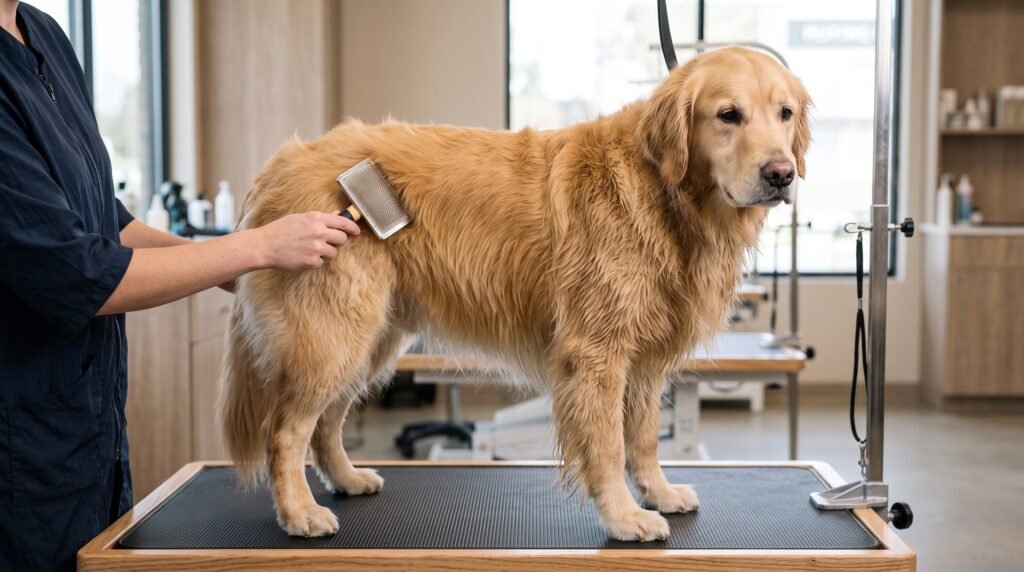
Is It Better to Brush a Dog’s Hair Wet or Dry? A Professional Grooming Guide
Brushing your dog may seem like a simple part of everyday pet care, but one small detail can make a significant difference in the health and appearance of their coat: Should you brush your dog’s hair wet or dry?
The answer depends on your dog’s coat type, the condition of their hair, and the grooming technique you’re using.
For most dogs, brushing a dry coat—or one lightly misted with a dog-safe conditioning spray—is preferable to brushing soaking-wet fur. Wet hair is more vulnerable to stretching and breakage, and brushing improperly can pull on the skin, worsen existing tangles, or cause unnecessary discomfort.
However, professional groomers sometimes work with damp coats during specific grooming procedures, particularly when applying conditioning treatments or preparing curly and long-haired breeds for drying.
Understanding when to brush, how much moisture to use, and which tools work best can help you maintain a healthier, softer, and more manageable coat.
Whether you have a Goldendoodle in Palm Beach, a Golden Retriever in New York, or a Maltese enjoying life in Miami, learning the correct brushing technique is an important part of your dog’s grooming routine.
Should You Brush Your Dog’s Hair Wet or Dry?
For everyday grooming, a dry or lightly misted coat is generally the safest and most practical choice.
Dry brushing allows you to identify tangles, remove loose hair, and work through the coat with greater control.
However, there is an important distinction between brushing completely dry hair and brushing a coat that has been lightly conditioned.
For many long-haired, curly, or delicate coats, professional groomers use a light grooming spray to provide slip, reduce friction, and help minimize hair breakage.
The goal is not to saturate the coat. It’s to make brushing gentler and more effective.
When Dry Brushing Works Best
Dry brushing is particularly useful for:
Removing loose hair between baths.
Maintaining short-haired coats.
Checking for developing tangles.
Removing loose undercoat with appropriate tools.
Performing routine coat maintenance.
When Lightly Damp Brushing May Be Appropriate
A slightly damp or conditioned coat may be beneficial when:
Working with long, silky hair.
Maintaining curly or wavy coats.
Using a professional detangling spray.
Performing controlled brush-drying.
Reducing static and friction during grooming.
The most important factor is using the correct technique for your dog’s coat.
Why Brushing a Dog’s Hair While Soaking Wet Can Be a Mistake
Wet hair behaves differently from dry hair.
When saturated, hair fibers can stretch more easily and may become more susceptible to mechanical damage, particularly when force is applied to existing tangles.
Aggressive brushing of a soaking-wet coat can lead to:
Hair breakage.
Uncomfortable pulling.
Increased tangling.
Skin irritation.
Damage to delicate coat textures.
This doesn’t mean wet hair should never be brushed.
Professional groomers may carefully comb or brush conditioned, damp hair during specific procedures. The difference lies in the amount of moisture, the tools selected, and the amount of tension applied.
The mistake isn’t simply brushing wet hair. It’s brushing without considering how moisture changes the coat’s behavior.
Should You Brush Your Dog Before or After a Bath?
Ideally, both—but for different reasons.
Before the Bath: Remove Loose Hair and Identify Tangles
Pre-bath brushing helps remove loose hair, surface debris, and manageable tangles.
This is particularly important for dogs with long or curly coats because bathing an already tangled coat can make existing mats more difficult to manage.
Professional groomers typically assess the coat before bathing to determine whether detangling is safe or whether more extensive coat care is necessary.
If your dog has severe matting, avoid bathing them at home before consulting a professional groomer.
After the Bath: Brush During Proper Coat Preparation
After bathing, the coat should be rinsed thoroughly and dried using techniques appropriate for the breed.
For many long-haired and curly-coated dogs, controlled brushing during drying helps separate the hair, prevent tangles, and produce a smooth finish.
A professional groomer may use a slicker brush, pin brush, or comb while directing warm—not hot—air through the coat.
For home grooming, avoid forcefully brushing saturated hair. Instead, gently remove excess water, use a suitable conditioning product if needed, and work carefully through small sections.
Does Coat Type Change Whether You Should Brush Wet or Dry?
Absolutely.
Different coat structures respond differently to moisture, friction, and brushing tools.
Understanding your dog’s coat type is essential for choosing the correct grooming method.
1. Short-Haired Dogs
Examples include:
French Bulldogs
Beagles
Boxers
Doberman Pinschers
Short-haired dogs generally benefit from brushing when their coats are dry.
A soft bristle brush or rubber grooming mitt can help remove loose hair and distribute natural skin oils across the coat.
Because these dogs typically don’t require extensive detangling, brushing soaking-wet hair offers little practical advantage.
Best approach: Brush gently on a dry coat, using tools designed for short hair.
2. Long-Haired Dogs
Examples include:
Maltese
Shih Tzus
Yorkshire Terriers
Afghan Hounds
Long-haired breeds require careful handling because their hair can become tangled and damaged through excessive friction.
Brushing a completely dry, delicate coat without any conditioning may contribute to static and breakage.
A light application of dog-safe detangling spray can help the brush move more smoothly through the hair.
Professional groomers often use section-by-section brushing to ensure that tangles are removed without pulling excessively.
Best approach: Brush a dry or lightly misted coat in small sections, using gentle strokes and appropriate conditioning products.
3. Double-Coated Dogs
Examples include:
Golden Retrievers
Siberian Huskies
German Shepherds
Australian Shepherds
Double-coated dogs have two distinct layers: a protective outer coat and an insulating undercoat.
Loose undercoat can become trapped beneath the guard hairs, particularly during seasonal shedding.
For routine home maintenance, brushing a dry coat with a suitable slicker brush, comb, or undercoat rake is often effective.
During professional grooming, specialized drying equipment may help release loose undercoat after bathing.
Best approach: Brush when dry for routine maintenance, and use careful drying and deshedding techniques after bathing.
4. Curly-Coated Dogs and Doodles
Examples include:
Poodles
Goldendoodles
Labradoodles
Bichon Frises
Curly and wavy coats require particular attention because loose hair may remain trapped within the coat rather than falling away.
This can lead to tangles and matting close to the skin.
Professional groomers often recommend line brushing, a technique that involves separating the coat into small sections and carefully brushing from near the skin toward the ends.
A light conditioning mist can help reduce friction during routine brushing.
Best approach: Brush a dry or lightly conditioned coat regularly, checking each section with a metal comb to ensure the hair is free of tangles.
What Is Line Brushing, and Why Do Professional Groomers Recommend It?
Line brushing is one of the most effective techniques for maintaining long, dense, or curly coats.
Rather than brushing only the surface, this method works through the coat in small, organized sections.
Here’s how it works:
Begin at the lower portion of the body or legs.
Gently separate a small section of hair.
Use a suitable brush to work through the exposed section, starting with the ends if tangled.
Gradually work closer to the skin without scraping or applying excessive pressure.
Move to the next section until the coat has been thoroughly brushed.
Use a metal comb to check for remaining tangles.
This technique is especially valuable for Poodles, Doodles, Maltese, and other breeds that require consistent coat maintenance.
However, line brushing should never become an exercise in forcing a brush through painful mats.
If the coat cannot be separated comfortably, professional assistance is recommended.
Can Brushing a Dry Dog’s Coat Cause Damage?
Yes, particularly when the wrong tools or excessive force are used.
Dry brushing isn’t automatically harmful, but certain coat types are more vulnerable to friction.
Potential problems include:
Hair breakage.
Static electricity.
Split or damaged hair ends.
Skin irritation from repeated brushing.
Discomfort when pulling through tangles.
For long or delicate coats, a lightweight conditioning spray formulated for dogs can make brushing more comfortable.
Avoid using heavy products that leave excessive residue or make the coat greasy.
The objective is to improve manageability without compromising the natural texture of the hair.
Common Mistakes to Avoid When Brushing Your Dog
Even experienced pet owners sometimes develop brushing habits that aren’t ideal for their dog’s coat.
Brushing Only the Surface
A coat may look perfectly smooth while hidden tangles develop underneath.
This is especially common in Doodles and other dense-coated breeds.
Brushing Aggressively Through Knots
Pulling on tangles can cause pain and damage the hair.
Always work gently and stop when a mat cannot be removed comfortably.
Using the Wrong Brush
A tool designed for a heavy-shedding double coat may be inappropriate for a fine, silky coat.
Applying Too Much Pressure
Dog skin can be irritated by repeated scraping, particularly with slicker brushes and metal grooming tools.
Brushing Immediately After Bathing Without Considering Coat Condition
Saturated, tangled hair may be more vulnerable to damage when handled aggressively.
Forgetting Sensitive Areas
Pay particular attention to:
Behind the ears.
Under the armpits.
Around the collar.
Behind the legs.
Around the tail.
Areas where a harness creates friction.
These locations are especially prone to tangling and matting.
How Often Should You Brush Your Dog?
The ideal frequency depends on the breed, coat length, lifestyle, and condition of the hair.
| Coat type | General brushing frequency |
|---|---|
| Short, smooth coats | 1–2 times per week |
| Medium-length coats | 2–3 times per week |
| Dense double coats | Several times weekly, with additional attention during shedding season |
| Long, silky coats | Daily or near-daily maintenance |
| Curly and Doodle coats | Daily or frequent thorough brushing, depending on coat length and texture |
These are general guidelines rather than fixed rules.
A Poodle maintained in a short, practical trim may need a different home routine than a Poodle with a long, elaborate coat.
Similarly, a Golden Retriever experiencing heavy seasonal shedding may require more frequent brushing than usual.
Consistency matters more than brushing aggressively or for excessively long periods.
Should You Use a Detangling Spray Before Brushing?
For many long-haired, curly, and delicate coats, a dog-safe detangling spray can be a valuable grooming aid.
These products are designed to help reduce friction and improve manageability.
Potential benefits include:
Easier brushing.
Less pulling on tangles.
Reduced static.
Improved coat smoothness.
Less mechanical stress on delicate hair.
Choose products specifically formulated for dogs and follow the manufacturer’s instructions.
If your dog has allergies, sensitive skin, or a diagnosed dermatological condition, consult your veterinarian before introducing new grooming products.
Does Florida’s Humidity Affect How You Should Brush Your Dog?
Climate can influence how a dog’s coat behaves, particularly in regions with high humidity.
In Florida, warm and humid conditions may contribute to moisture lingering in dense coats, especially after swimming, bathing, or outdoor activities.
Dogs that frequently swim or spend time outdoors may require additional coat inspections and careful drying.
For example, a Goldendoodle enjoying the beaches of South Florida may develop tangles more quickly when wet hair repeatedly rubs against a harness or collar.
The solution isn’t necessarily more aggressive brushing.
It’s consistent coat maintenance, proper drying, and attention to friction-prone areas.
In New York, seasonal changes can create different grooming challenges, including winter dryness, indoor heating, and heavier seasonal shedding in certain breeds.
A thoughtful grooming routine should adapt to both the dog’s coat and their environment.
When Should You Leave Brushing to a Professional Groomer?
At-home brushing is an essential part of responsible dog ownership, but not every coat condition can be managed safely without professional help.
Consider scheduling a grooming appointment if your dog has:
Tight mats close to the skin.
Extensive tangling.
Significant coat compaction.
Skin redness or irritation.
Pain when brushed.
Persistent resistance to grooming.
A coat that remains tangled despite regular maintenance.
Professional groomers can evaluate coat condition, recommend appropriate tools, and determine whether detangling or clipping is the more comfortable option.
For severe matting, attempting to preserve every inch of hair may not be in the dog’s best interest.
Comfort and safety should always come before coat length.
Frequently Asked Questions About Brushing Wet or Dry Dog Hair
Is it bad to brush a dog’s hair when it’s wet?
Not necessarily. Gentle brushing of a damp, conditioned coat can be appropriate for certain grooming techniques. However, aggressively brushing soaking-wet or tangled hair can increase breakage and discomfort.
Should I brush my dog before giving them a bath?
Yes, in most cases. Pre-bath brushing helps remove loose hair and identify tangles before water makes them more difficult to manage.
Can I brush my dog immediately after a bath?
Yes, but the technique matters. After gently removing excess water, certain coats can be carefully brushed during drying. Avoid forcefully pulling through saturated tangles.
Should I wet my dog’s hair before brushing?
You generally don’t need to soak the coat. For long, curly, or delicate hair, a light mist of dog-safe conditioning spray may help reduce friction and improve brushing.
Is it better to brush a Goldendoodle wet or dry?
For routine maintenance, a dry or lightly misted coat is generally preferable. Use a suitable slicker brush and metal comb to work through small sections and check for tangles close to the skin.
Can brushing help reduce shedding?
Yes. Regular brushing removes loose hair before it falls around the home. The effectiveness depends on coat type, tool selection, and brushing technique.
Final Thoughts: Wet or Dry, the Right Brushing Technique Makes All the Difference
So, is it better to brush a dog’s hair wet or dry?
For most everyday grooming situations, brushing a dry or lightly misted coat is the preferred approach.
However, the correct technique depends on the dog’s coat type, hair condition, and grooming needs.
Short-haired dogs generally do well with gentle dry brushing. Long-haired and curly-coated breeds often benefit from light conditioning sprays that reduce friction. Double-coated dogs require careful undercoat maintenance, while professional groomers may use controlled brushing during drying to achieve a healthy, polished finish.
The most important lesson is that brushing should never be rushed or uncomfortable.
Proper grooming isn’t about removing as much hair as possible or achieving a perfectly styled coat in the shortest amount of time.
It’s about preserving coat integrity, preventing painful matting, protecting the skin, and helping your dog feel comfortable.
At Puppy Love, we believe beautiful grooming begins with understanding the individual needs of every dog.
Because a healthy, well-maintained coat isn’t simply about appearance—it’s an important part of your dog’s everyday comfort, care, and well-being.