
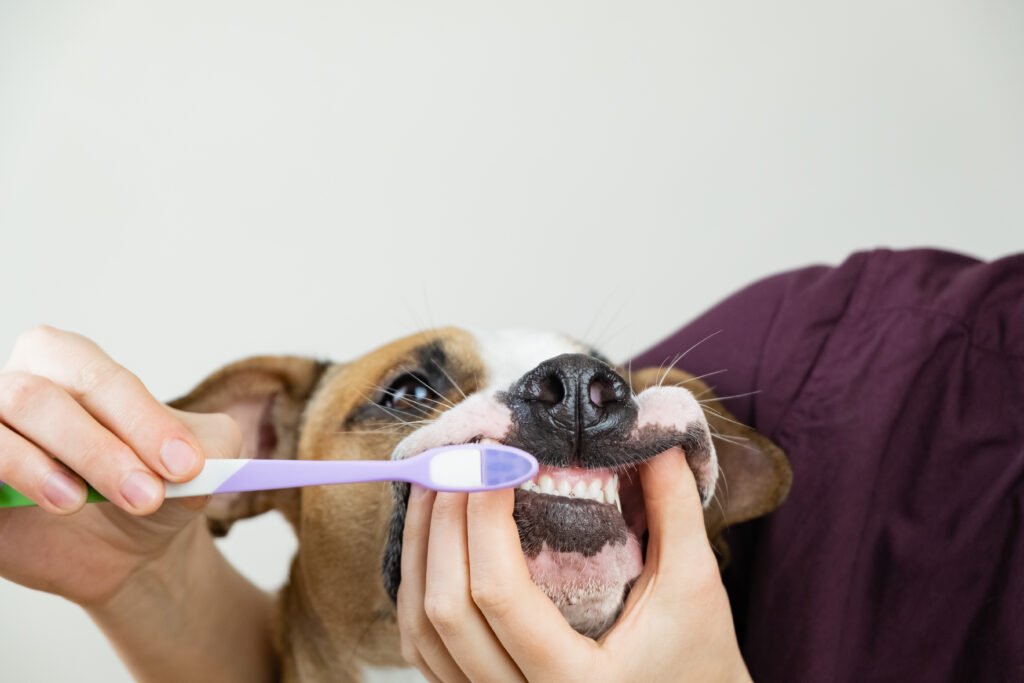
Why Do Dogs Hate Getting Their Teeth Brushed? Understanding the Reasons and How to Make Dental Care Easier
You love your dog, and you want to give them the very best care. You schedule grooming appointments, choose quality nutrition, and make sure they receive regular veterinary checkups. But when it’s time to brush their teeth, even the sweetest, most affectionate dog may suddenly become uncooperative.
Sound familiar?
If you’ve ever wondered, “Why does my dog hate getting their teeth brushed?”, you’re certainly not alone.
Many dogs resist toothbrushing because the sensation is unfamiliar, they dislike having their mouths handled, or they’ve developed negative associations with the experience. In some cases, resistance can also be a warning sign of dental pain or underlying oral health problems.
The good news? Most dogs can learn to become more comfortable with toothbrushing through patience, positive reinforcement, and a gradual introduction to dental care.
Understanding your dog’s behavior is the first step toward transforming a stressful routine into a manageable—and potentially enjoyable—part of their daily care.
In this guide, we’ll explore why dogs dislike having their teeth brushed, how to recognize discomfort, and what you can do to make dental hygiene safer, easier, and more effective.
Why Do Dogs Hate Getting Their Teeth Brushed?
Dogs don’t naturally understand why humans want to clean their teeth.
Unlike bathing, brushing, or other grooming activities that may become familiar through regular handling, toothbrushing involves direct contact with one of the most sensitive areas of a dog’s body: the mouth.
Several factors can explain their resistance.
1. They Aren’t Used to Having Their Mouths Touched
A dog’s mouth is highly sensitive.
Their lips, gums, tongue, and surrounding facial structures contain numerous sensory receptors that help them interact with their environment.
When someone lifts their lips or introduces a toothbrush, the experience may feel strange or intrusive.
Dogs that weren’t introduced to mouth handling as puppies may be especially hesitant.
What helps: Begin by gently touching the outside of your dog’s muzzle and rewarding calm behavior. Gradually progress to lifting the lips before introducing a toothbrush.
The goal is to build familiarity without forcing the interaction.
2. The Toothbrush Feels Uncomfortable
Imagine someone suddenly placing an unfamiliar object inside your mouth without explaining what they’re doing.
For many dogs, that’s essentially what toothbrushing feels like.
A toothbrush introduces unfamiliar sensations, including:
Pressure against the teeth.
Movement along the gumline.
Contact with the lips and cheeks.
An unusual object entering the mouth.
Repetitive movements near sensitive tissues.
Some dogs are particularly sensitive to the texture or size of a toothbrush.
What helps: Use a soft-bristled toothbrush designed for dogs and begin with only a few gentle strokes.
A small toothbrush may provide better control for toy breeds, while larger dogs may benefit from a longer-handled canine toothbrush.
3. They May Have Dental Pain
This is one of the most important reasons not to ignore resistance.
Sometimes, a dog doesn’t dislike toothbrushing because of the activity itself.
They dislike it because their mouth hurts.
Dental problems such as periodontal disease, fractured teeth, inflamed gums, and other oral conditions can make brushing painful.
Warning signs may include:
Persistent bad breath.
Red or swollen gums.
Bleeding from the mouth.
Excessive drooling.
Difficulty chewing.
Dropping food while eating.
Pawing at the mouth.
Reluctance to have the face touched.
Sudden resistance to previously tolerated brushing.
Dental disease is common in dogs, particularly as they age.
If your dog suddenly becomes resistant to toothbrushing or shows signs of oral discomfort, schedule a veterinary dental examination before continuing.
Never force brushing when dental pain is suspected.
4. They’ve Had a Negative Experience
Dogs learn through association.
If a previous brushing session involved discomfort, restraint, or fear, your dog may begin associating the toothbrush with something unpleasant.
Even one stressful experience can influence future behavior.
For example, your dog may learn:
Toothbrush appears → uncomfortable handling begins → escape becomes difficult.
Over time, the dog may start resisting before brushing even begins.
The solution isn’t stronger restraint.
It’s rebuilding trust through gradual exposure and positive experiences.
5. They Don’t Like the Toothpaste
Not all dogs enjoy the same flavors or textures.
Some may dislike certain poultry, beef, or mint-flavored products, even when those products are specifically formulated for pets.
Others may simply be uncomfortable with the unfamiliar sensation of toothpaste inside their mouths.
Choosing a palatable canine toothpaste can make a significant difference.
Always use toothpaste specifically designed for dogs.
Never use regular human toothpaste, as it may contain ingredients unsuitable or toxic to dogs, including xylitol.
6. The Brushing Process Happens Too Quickly
Many well-intentioned pet parents try to brush all their dog’s teeth during the first session.
Unfortunately, this can overwhelm a dog that hasn’t learned to tolerate mouth handling.
Successful dental care usually requires a gradual process.
Start with a few seconds of comfortable interaction and increase the duration as your dog becomes more confident.
A short, positive experience is far more valuable than a complete brushing session that leaves your dog frightened.
Do Dogs Really Need Their Teeth Brushed?
Yes.
Routine toothbrushing is one of the most effective ways to help control dental plaque in dogs.
Plaque is a soft bacterial biofilm that continuously develops on the tooth surface.
If it isn’t removed, plaque can mineralize into tartar, also called dental calculus.
As dental deposits accumulate, bacteria and inflammation can contribute to periodontal disease.
Periodontal disease affects the tissues supporting the teeth, including the gums, periodontal ligament, and surrounding bone.
Without appropriate care, advanced disease can lead to:
Chronic oral pain.
Gum inflammation.
Tooth mobility.
Tooth loss.
Oral infections.
Difficulty eating.
Regular brushing helps disrupt plaque before it hardens.
However, brushing cannot remove established tartar or treat advanced periodontal disease. Those conditions require veterinary assessment and, when indicated, professional dental treatment.
How Often Should You Brush Your Dog’s Teeth?
Daily toothbrushing is the ideal goal for most dogs.
Plaque begins forming again after cleaning, which is why consistency matters.
Brushing several times per week is generally better than not brushing at all, but daily brushing provides the most reliable routine for plaque control.
The exact approach should consider your dog’s age, oral health, temperament, and veterinary recommendations.
Small and toy breeds, including Yorkshire Terriers, Chihuahuas, Maltese, and Pomeranians, can be particularly susceptible to periodontal problems.
These dogs may benefit from especially consistent dental care and regular veterinary dental evaluations.
How to Train Your Dog to Accept Toothbrushing
The most effective approach is gradual desensitization combined with positive reinforcement.
Rather than expecting immediate cooperation, introduce each step at your dog’s pace.
Step 1: Make Mouth Handling a Positive Experience
Begin when your dog is relaxed.
Gently touch the side of their muzzle, offer a small reward, and stop.
Repeat until your dog appears comfortable.
Gradually practice lifting the upper lip for a moment.
Avoid opening the mouth forcefully.
Step 2: Introduce Dog-Safe Toothpaste
Place a small amount of veterinary-approved canine toothpaste on your finger and allow your dog to investigate it.
If your dog enjoys the flavor, reward their curiosity.
Do not force toothpaste into their mouth.
Step 3: Introduce the Toothbrush
Allow your dog to sniff the toothbrush.
Reward calm investigation.
Next, briefly touch the brush to an easily accessible tooth without attempting a complete cleaning.
Stop before your dog becomes distressed.
Step 4: Begin With a Few Teeth
Start with the outer surfaces of the canine teeth or other easily accessible teeth.
Use small, gentle movements along the tooth surface near the gumline.
Focus on comfort rather than perfection.
Step 5: Gradually Increase the Brushing Time
As your dog becomes more comfortable, slowly increase the number of teeth you brush.
Eventually, work toward cleaning the outer surfaces of the teeth, including the back premolars and molars where plaque commonly accumulates.
Use gentle pressure and avoid scrubbing aggressively.
Step 6: Finish With a Positive Reward
End each successful session with something your dog enjoys.
This might include:
A favorite treat.
Verbal praise.
A short play session.
Gentle affection, if your dog enjoys it.
The objective is to teach your dog that toothbrushing predicts a positive outcome.
Never punish growling, avoidance, or resistance during dental care. These behaviors can communicate discomfort or fear.
What Is the Best Toothbrush for Dogs?
The right toothbrush depends on your dog’s size, mouth anatomy, and tolerance.
Soft-Bristled Dog Toothbrush
Often the best starting point for routine dental care.
Soft bristles can clean the tooth surfaces while minimizing unnecessary irritation.
Finger Toothbrush
A finger brush may feel less intimidating to some dogs, although it can offer less reach and control in certain areas.
It also places your finger close to the dog’s teeth, making it unsuitable for dogs that may bite.
Long-Handled Canine Toothbrush
These brushes can help reach the back teeth, especially in medium and large breeds.
Regardless of the design, the toothbrush should be comfortable to handle and appropriately sized for your dog.
Avoid hard bristles and excessive pressure.
What If Your Dog Absolutely Refuses Toothbrushing?
Some dogs need more time than others.
If your dog consistently refuses brushing, don’t turn the process into a physical struggle.
Instead, consider alternatives that can support oral hygiene while you work on training.
These may include:
Veterinary-approved dental chews.
Dental diets designed to reduce plaque or tartar.
Appropriate dental wipes.
Certain veterinary dental gels.
Regular veterinary dental examinations.
When selecting dental products, look for those accepted by the Veterinary Oral Health Council (VOHC), which evaluates evidence supporting specific plaque or tartar control claims.
These products can complement an oral care routine, but they don’t necessarily provide the same mechanical plaque removal as effective toothbrushing.
Avoid extremely hard chew items that could fracture teeth, such as bones, antlers, and other objects that cannot be indented with a fingernail.
If your dog remains fearful or defensive, consult your veterinarian or a qualified reward-based behavior professional.
Can Professional Dog Grooming Replace Toothbrushing?
Professional grooming can support your dog’s overall hygiene, but it should not replace veterinary dental care or consistent at-home plaque control.
Some grooming services may offer superficial toothbrushing as an additional hygiene service.
However, it’s important to understand the difference between routine brushing and professional veterinary dental treatment.
A grooming appointment cannot diagnose periodontal disease, clean beneath the gumline, or replace a comprehensive dental examination.
Veterinary dental procedures may include:
Oral examination.
Dental charting.
Dental radiographs.
Scaling above and below the gumline.
Polishing.
Treatment of diseased teeth.
These procedures are performed by veterinary professionals, generally under anesthesia when a comprehensive dental cleaning is needed.
At Puppy Love, we believe grooming and preventive care should work together to support a dog’s comfort, hygiene, and well-being.
Why Some Dogs Suddenly Start Hating Toothbrushing
If your dog previously accepted toothbrushing but suddenly begins avoiding it, pay attention.
A change in behavior can indicate:
Gum inflammation.
A fractured tooth.
Oral injury.
Painful dental disease.
Increased sensitivity.
A recent negative experience.
Do not assume your dog is simply being stubborn.
Sudden behavioral changes deserve investigation, especially when the mouth is involved.
A veterinarian can evaluate whether pain or another medical condition is contributing to the resistance.
Does Starting Toothbrushing as a Puppy Make a Difference?
Yes.
Introducing gentle oral handling during puppyhood can make future dental care easier.
Puppies are learning about their environment, and positive early experiences can help them become comfortable with routine care.
Begin with brief sessions that involve touching the muzzle, lifting the lips, and rewarding calm behavior.
During teething, puppies may experience increased oral sensitivity, so avoid forcing brushing when the gums are uncomfortable.
The objective is not to achieve perfect brushing immediately.
It’s to build confidence and establish a predictable routine that can continue into adulthood.
Adult and senior dogs can also learn to tolerate toothbrushing, although some may require a slower introduction.
Frequently Asked Questions About Brushing Your Dog’s Teeth
Why does my dog fight me when I try to brush their teeth?
Your dog may be uncomfortable with mouth handling, unfamiliar with the toothbrush, frightened by previous experiences, or experiencing dental pain. Begin with gradual, reward-based training and seek veterinary advice if discomfort is suspected.
Is it normal for dogs to hate getting their teeth brushed?
Resistance is common, particularly in dogs that haven’t been gradually introduced to oral care. However, not all dogs dislike toothbrushing, and many can learn to tolerate it through positive reinforcement.
Should I force my dog to let me brush their teeth?
No. Forcing toothbrushing can increase fear, create negative associations, and increase the risk of injury. Use gradual training and stop if your dog shows significant distress.
Can I brush my dog’s teeth with human toothpaste?
No. Human toothpaste may contain ingredients that are unsafe for dogs. Always use toothpaste specifically formulated for canine use.
How long does it take to train a dog to accept toothbrushing?
There is no universal timeline. Some dogs become comfortable after several short sessions, while others may require weeks or longer. Progress depends on temperament, previous experiences, and the consistency of training.
What happens if I never brush my dog’s teeth?
Without effective plaque control, your dog may develop increased tartar accumulation, gingivitis, and periodontal disease. Regular veterinary dental examinations and appropriate home care help reduce these risks.
Can a groomer clean my dog’s teeth?
Some groomers provide basic toothbrushing, but this is not equivalent to professional veterinary dental cleaning. A veterinarian is responsible for diagnosing and treating dental disease.
Final Thoughts: Why Dogs Hate Toothbrushing—and How You Can Help
So, why do dogs hate getting their teeth brushed?
For many dogs, the answer comes down to unfamiliar sensations, sensitivity around the mouth, negative experiences, or simply not understanding what is happening.
For others, resistance may be an important warning sign of dental discomfort.
The solution isn’t to force cooperation. It’s to create a positive experience through patience, consistency, and gentle training while making sure your dog’s mouth is healthy.
Daily toothbrushing, when tolerated and performed correctly, can become one of the most valuable parts of your dog’s preventive care routine.
And while a beautiful coat and a fresh grooming appointment may be the most visible signs of good care, a healthy mouth is just as important to your dog’s comfort and quality of life.
At Puppy Love, we believe exceptional pet care goes beyond appearance. It means understanding your dog’s individual needs, respecting their comfort, and helping pet parents build healthy routines that last a lifetime.
Because taking care of your dog’s smile is another meaningful way to care for the companion who makes you smile every day.